
Research Themes
Over 90% of manufactured goods have a catalytic step in their manufacturing process, representing a significant global energy cost.
No matter what the catalyst, there is always one goal:
reduce the energy barriers to selective reactivity.
The KGA group aims to "solve catalysis" by discovering and codifying universal catalytic principles, including:
molecular design
supramolecular catalysts
small molecule organocatalysts
computational design
models of enzymatic catalysis
conceptual strategies
catalysis with fields
catalysis with dynamics
selective cavity catalysis
coupled catalysis
method design
sustainable organocatalysis
routes to high-value, functionalised bio-derived molecules
bespoke molecules for industry
regio- and enantioselective cavity catalysis

There are two approaches to catalysis...
...but many ways to approach those approaches.
We aim to develop new approaches.
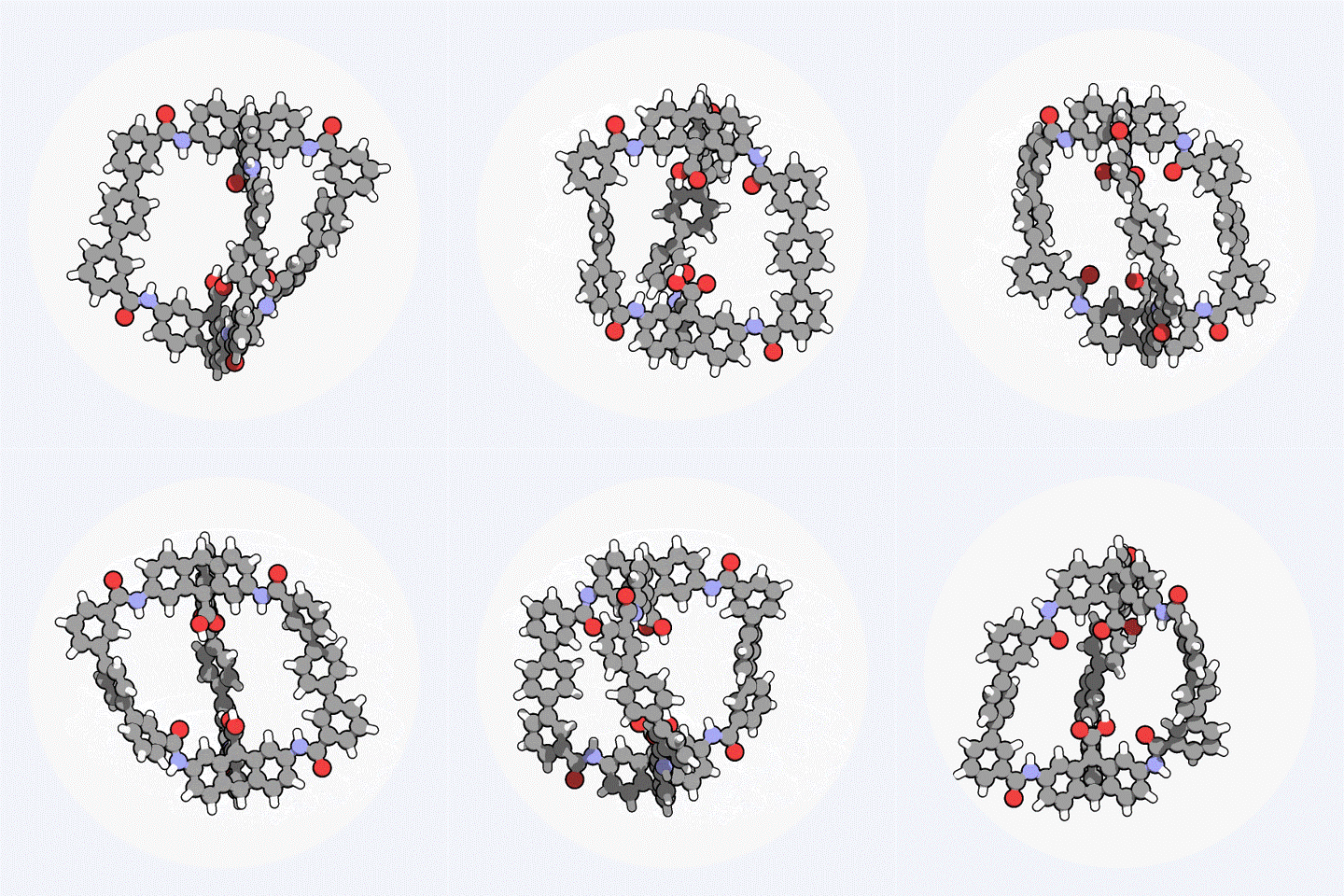
Supramolecular Design
There are arguably at least five Chemistry Nobel Prizes involving supramolecular chemistry. From preorganised 3D structures, chemists have generated sensors, scaffolds, catalysts, functional materials, and molecular machines. Despite these advances, the field remains in its infancy in understanding the many contributing energetic factors that endow geometry and function.
For instance, the vast majority of self-assembly relies on symmetric designs that bear little resemblance to the low symmetry structures of enzymes and biomolecules. Is it possible to self-assemble chiral cavities that resemble enzyme pockets using achiral building blocks? Can these processes be rendered enantioselective? Can we use reversible self-assembly techniques to access stable, functional cavities?
The KGA Group takes a magnifying glass to understanding the complex rules that dictate how molecules self-assemble into complex shapes with function using our Programmable Robust Organic Cages.
Wonky is beautiful.
Supramolecular Organocatalysis
Most enzymes are arguably just supramolecular structures performing organocatalysis. Despite decades of supramolecular innovation, cages with properly defined organocatalytic motifs remain rare. We are challenging this paradigm using our programme of tunable organic cage cavities where we have exquisite control over functional group placement and peripheral environment to guide and accelerate difficult chemical reactions, creating brand new transition states.
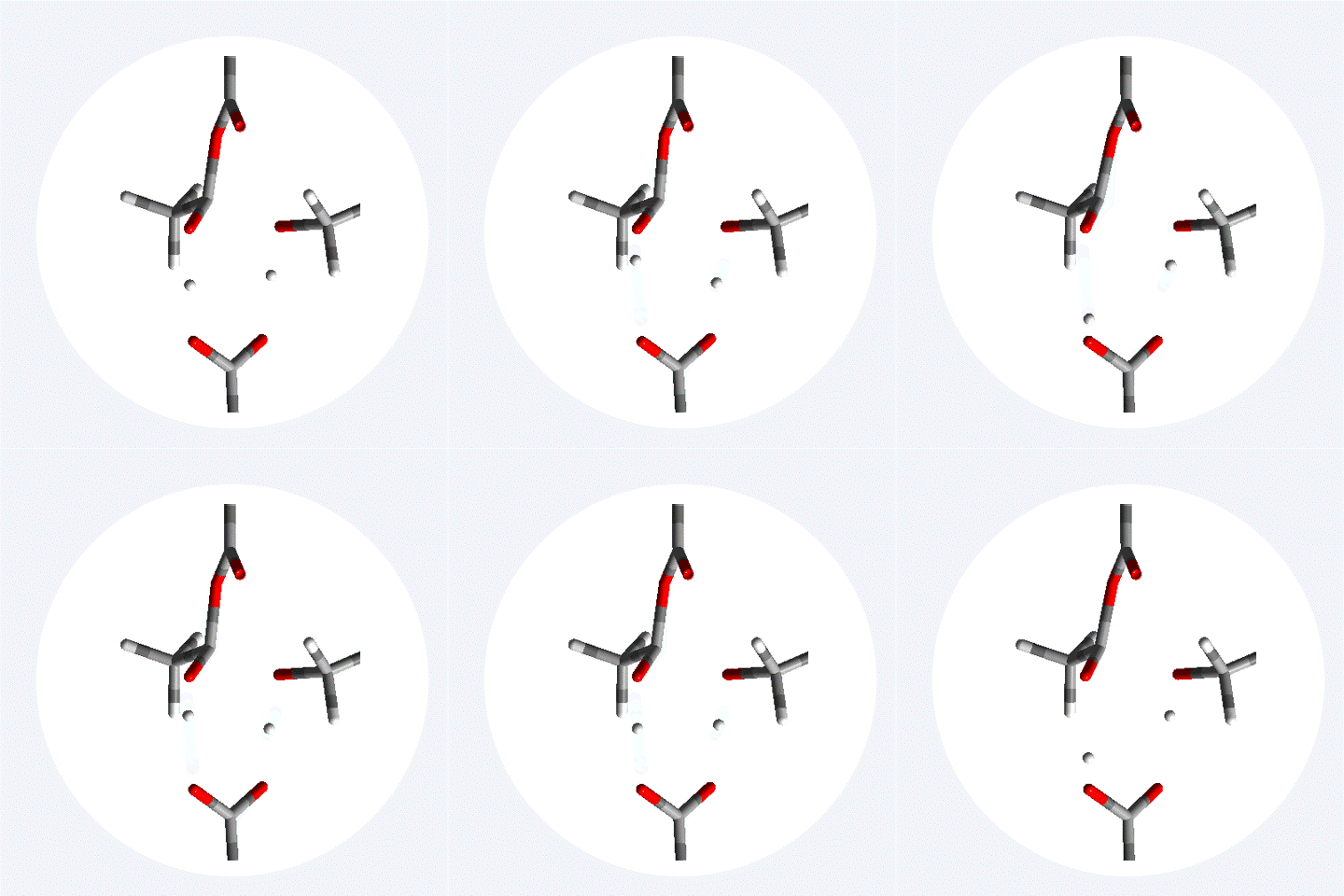
Did you ever see this transition state before?

Not a sacrificial reagent in sight...
Novel Catalytic Strategies
It has been 80 years since Pauling's ground-breaking contributions to understanding enzyme catalysis, and chemists and biochemists are still learning new strategies for accelerating reactions to reduce energy costs. We are currently trying to codify electric field catalysis, dynamic effects, and energetic coupling pathways to reduce kinetic barriers outside the classical remit of standard "through-bond" activation. This is primarily organocatalysis - but not as we know it...
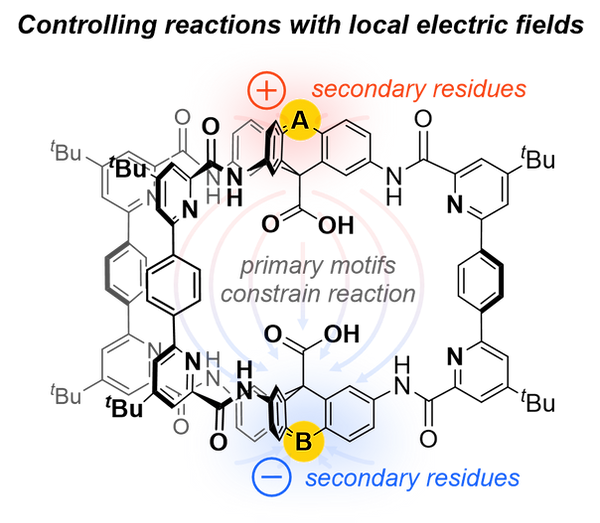
An approach to align EFs across reactions.
Selective Reactions of Biomolecules
What do DNA, proteins, lipids and sugars have in common? The answer is they are all sustainable feedstocks molecules with difficult selectivity challenges for chemists!
How do you regioselectively functionalise sugars? How do you cleanly break down cellulose towards biofuel? How do you synthesise novel labelled lipids with high purity for use in sustainable detergents or as molecular probes for interrogating disease and metabolism pathways?
We are using our catalysis design expertise to target these high value molecules without laborious protecting-group strategies or intractable purification pathways.

Will this ever be possible?
Photocatalysis in Cavities
Photochemistry allows facile R-X bond activation, including CH activation. But which CH groups can you activate in your substrate?
Traditionally, the innate reactivity of bonds drives reactivity.
We are incorporating photocatalysts into our cages to direct specific bond formations against innate reactivity.